
Being stuck on the side of the road in the middle of heavy traffic or inserting the key and hearing a disheartening click in the deserted parking lot leaves you feeling vulnerable. At that particular time, contacting a dependable 24/7 flatbed towing service company is the essential first move. Nonetheless, for most motorists, the time frame from placing the call to when the headlights of the rescue truck appear is usually accompanied by anxiety. Knowing how the entire process of dispatching and retrieval takes place not only helps you be ready for the arrival of the team but also keeps you safe and organized.
Phase 1: The Urgent Intake and Logistics Assessment
The moment your call connects with an emergency dispatcher, a highly coordinated, high-tech response system springs into action. Dispatchers in the roadside assistance sector are trained heavily in triage—much like emergency medical personnel. They recognize that you might be panicked, cold, hot, or feeling unsafe due to passing traffic, so they will immediately prioritize gathering vital details to ensure your physical safety and accurately locate your asset.
In this time, the dispatcher will determine your exact location by way of GPS mapping programs or landmarks in your description. Diagnostic questions that will be asked include whether your vehicle has stalled out completely or only needs a jump-start, whether your wheels have become locked, and whether you are in danger of being in a ditch or are parked on an even surface. The answers to these questions will determine what equipment you will need in order to avoid further damaging your vehicle.
Phase 2: Dispatching the Right Specialist
After analyzing all details about your situation, the dispatcher then cross-checks your exact location with the GPS locations of the active fleet. For complicated breakdown cases, flat tires in luxury four-wheel drive cars, and severe mechanical troubles, using hook-and-chain trucks should be completely avoided at all costs. These are sensitive situations that need more advanced techniques of handling. This is why dispatchers aim to dispatch only those operators who have advanced rollback and professional wrecking services.
Meanwhile, while the specialized driver makes his way towards your location, the back-end administrative staff takes care of the logistics. They stay in contact with you via messages and follow-up phone calls to give you accurate ETAs so that you do not need to guess about your situation.
Phase 3: Tactical Arrival and Scene Management
As soon as the recovery truck arrives at your site, the next thing they do is create a safe zone around you. The operator positions his truck to block traffic from approaching your broken-down car and uses strobe lights to warn other drivers of his presence in the area. A professional recovery person approaches you with an introduction and outlines the recovery procedure for you.
After inspecting your car physically for its ground clearance, proper steering, and proper location of the designated tow eye, he proceeds with the process. He does this because he needs to ensure that no stress is put on fragile parts such as aluminum control arms, bumpers, and electronics during recovery.
Phase 4: Precision Loading and Transport Securing
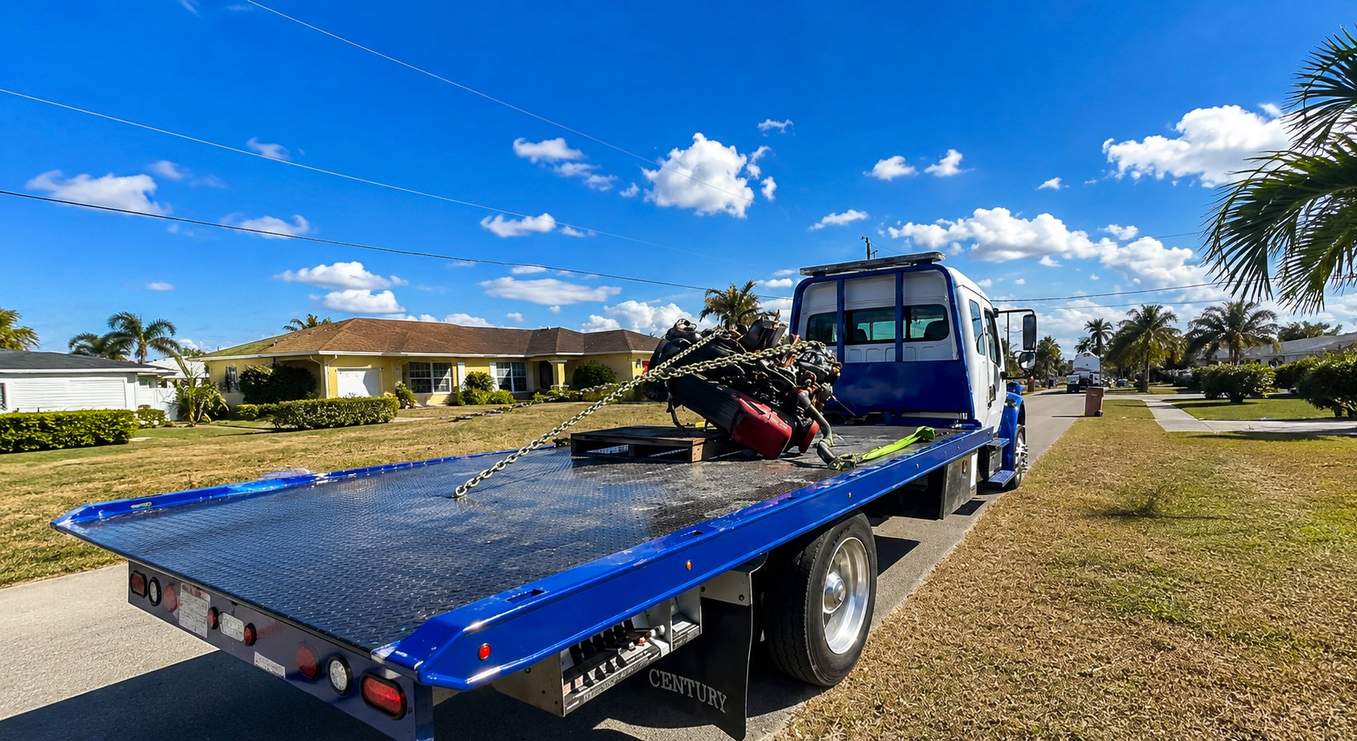
Now that the physical inspection has been concluded, the loading process can begin. In case a flatbed truck is employed, the hydraulic bed is first brought down gently to the floor in order to form an incline. Using winches or steel cables fixed firmly on the frame of your car, the operator will carefully move the car along the incline using heavy-duty synthetic winches or steel cables tied only to the frame members of the car. Vehicles that have been fully parked, damaged axles, or low ground clearance must be loaded using special equipment such as skates, dollies, and snatch blocks so as to ensure friction-free movement.
When the vehicle has successfully made it to the bed, the next step is securing it.
Phase 5: Seamless Transit and Secure Drop-Off
Once your vehicle is secured into place, you and the driver will determine the logistics of getting it to its destination. It does not matter whether your vehicle is being transported straight to a trusted dealership in the area, to an auto repair shop, a secure storage facility, or to your own driveway; each trip is made using the most efficient and smooth routes possible. In many areas, drivers are invited to accompany the vehicle inside the temperature-controlled cab of the transport truck, meaning that you do not have to make arrangements for another form of transportation after you are stranded on the highway.
Once you arrive at your destination, your vehicle will be unloaded in the same careful fashion in which it was loaded onto the transport truck. Your vehicle will be lowered from the transport ramp, disconnected from the lift system, and carefully set down right where it needs to be placed.
Restoring Control to Chaotic Roadside Scenarios
Experiencing an unexpected vehicle failure can completely disrupt your day, but knowing the precise operational mechanics that follow your initial call helps strip away the anxiety of the unknown. Roadside emergencies require an immediate, calculated, and professional response framework to ensure that both you and your vehicle are protected from environmental hazards and secondary damage.
Should you find yourself in a vulnerable position while on the road, with a need for a crew that offers not only fast logistics but also top-notch technical skills, then turning to the seasoned professionals at Flatbed Towing & Wrecker Services will ensure you are getting exactly what you need for your day to return to normal.